What to do in Rome
115 places curated from 10 travel vlogs — the more a spot gets mentioned, the higher it ranks
Colosseum
The iconic ancient amphitheatre, which once held up to 80,000 spectators for gladiator fights and staged battles. Pre-printed tickets let you skip the line, and climbing to the top tier gives an overall view of the arena and its underground chambers.





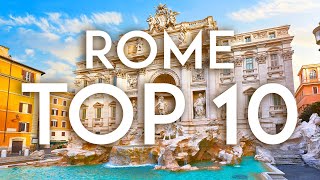

Trevi Fountain
One of the most iconic sights in Rome, a short walk from Barberini metro station.
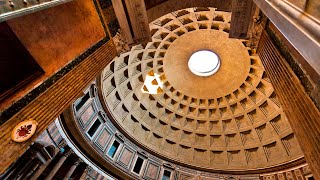
Pantheon
A breathtaking ancient temple in the historic centre. It is worth passing by in the evening, and it can be visited inside.

Roman Forum
The heart of ancient Rome, just across the plaza from the Colosseum, with the ruins of many of the city's most important buildings. It is especially peaceful early in the morning, and you can easily spend a couple of hours exploring.
Piazza Navona
A piazza that follows exactly the outline of Emperor Domitian's 1st-century stadium, whose ruins survive in its foundations. Bernini shaped its final layout, which has three richly carved fountains.
Trastevere
The district 'across the Tiber', home to many Renaissance-era palaces and villas.
St. Peter's Basilica
The great basilica built between 1506 and 1626 and the foremost of Rome's seven pilgrimage churches.
Spanish Steps
A theatrical staircase built 1721–1725, unique in city planning because the stairs themselves are the visual centre. From the top you see Rome's domes floating above the city.
St. Peter's Square
Bernini's 1655 piazza complex with vast oval colonnades around Sixtus V's 1586 obelisk and Maderno's fountains. It measures 198 m at its widest.
Palatine Hill
A short walk up from the Forum, this hill holds the remains of the imperial palace. It offers views over the Forum on one side and Circus Maximus on the other.
Circus Maximus
A giant ancient open-air stadium for chariot racing and public events that could hold up to 150,000 people. It is best viewed from the top of Palatine Hill.
Piazza di Spagna
A famous Roman plaza at the foot of the Spanish Steps, which were closed for renovation at the time of filming. It is a nice place to stroll and people-watch.
Vittoriano (Altare della Patria)
The national monument to Victor Emmanuel II, closing the view down the Trident's middle street.
Piazza del Popolo
Rome's main entrance since Roman times and the origin of the three-street 'Trident'. Valadier later reshaped it into an oval with an obelisk at its centre and twin churches between the streets.
Villa Borghese Gardens
Rome's 'Central Park', a sprawling green escape from big-city noise where locals relax and kids run wild.
Vatican Museums
Eleven miles of halls holding one of the world's greatest collections of Western art, including Raphael's Transfiguration and the Laocoön. The Raphael Rooms contain The School of Athens.
Vatican City
Lies outside the central sightseeing area and is described as another full-day destination.
Castel Sant'Angelo
A notable site outside the central sightseeing area, easily reached by metro.
Archbasilica of St. John Lateran
Commissioned by Constantine in 324, it was the first Christian basilica in Rome. Inside are gigantic doors, marble statues of the twelve apostles and a detailed golden ceiling, all in a calm, peaceful atmosphere.
Baths of Caracalla
An ancient Roman bath complex, one of the key sites of ancient Rome.
Trinità dei Monti
The church at the top of the Spanish Steps. A Sixtine street was forced to end in front of it because of the steep hill.
Campo de' Fiori
A vibrant morning market square selling seasonal produce such as puntarelle, asparagus and artichokes. At night it becomes a lively social spot.
Stadium of Domitian
A 1st-century AD stadium where ancient Romans held games. Piazza Navona was built on its ruins.
Sistine Chapel
A chapel within the Vatican Museums famous for Michelangelo's painted ceiling.
Temple of Saturn
One of the oldest temples in Rome, located in the Roman Forum. It dates back to the 6th century BC, and its surviving remains are from 42 BC.
Scala Santa
A chapel across from St. John Lateran housing the 28 steps said to be the staircase Jesus climbed at Pontius Pilate's palace. Pilgrims ascend on their knees, saying a prayer on each step, which takes about 15 minutes.
Aurelian Walls
The 3rd-century defensive walls built by Emperor Aurelian. They show how much larger ancient Rome was than the Renaissance city.
Fountain of the Four Rivers
Bernini's fountain in Piazza Navona, where carved stone is made to look like raw nature.
Piazza Venezia
The square at the end of the Trident's middle street, Via del Corso.
Piazza del Campidoglio
Michelangelo's 1537 trapezoidal square on the Capitoline Hill, centred on the bronze statue of Marcus Aurelius and set off by its star-patterned oval. It faces the Palazzo Senatorio and sits between ancient Rome and the Vatican.
Arch of Septimius Severus
A triumphal arch marking one end of the Via Sacra, ancient Rome's main street. Its reliefs served as imperial propaganda celebrating military conquest.
Appian Way
Rome's ancient gateway to the East still has its original paving stones and is lined with tombs of ancient big-shots. It is fun to explore on a rented bike.
Ponte Sant'Angelo
Emperor Hadrian built this bridge in the 2nd century as part of the grand entranceway to his mausoleum. Its angel statues guide pilgrims across the Tiber toward the Vatican.
Isola Tiberina
This island sanctuary in the Tiber is a peaceful place to spend the evening as the sun sets. It is a good spot for traditional Roman recipes perfected by generations of Italian grandmothers.
Mausoleum of Augustus
The tomb of Emperor Augustus, passed on the way to Trastevere.
Pyramid of Cestius
The Pyramid of Cestius is an ancient pyramid over 2,000 years old, built as the tomb of Gaius Cestius next to Porta San Paolo. Since 2015 it has been open to the public only on certain days.
Trattoria Luzzi
A casual trattoria with a huge menu on the back side of the Colosseum. Mark had fried vegetable antipasto, Roman-style tripe in tomato sauce, and a tomato pasta with cured pork, with the tripe as his standout.
Basilica of San Clemente
A church on the walk between the Colosseum and San Giovanni. It closes for a couple of hours at lunchtime, so time your visit accordingly.
Gelateria Valentino
A gelato shop on the walk from Barberini toward the Trevi Fountain. Its gelato is very milky and smooth, and Mark particularly liked the chocolate chip and the coconut with bits of dried coconut.
Fontana dell'Acqua Felice
A monumental Baroque fountain marking the end of the ancient aqueduct restored by Domenico Fontana for Sixtus V. The aqueduct brought fresh water to 27 new fountains across Rome.
Basilica of Santa Maria Maggiore
One of the seven pilgrimage churches. Sixtus V marked it with an obelisk as a key node in his street network.
Basilica of Saint Paul Outside the Walls
One of the original five pilgrimage churches of Rome.
Basilica of San Lorenzo Outside the Walls
One of the original five pilgrimage churches of Rome.
Basilica of Santa Croce in Gerusalemme
A pilgrimage church that was later accorded special veneration. Sixtus V planned a street linking it directly to Piazza del Popolo.
Basilica of San Sebastiano Outside the Walls
One of the seven pilgrimage churches of Rome, later accorded special veneration.
Quirinal Palace
The former papal summer palace at the end of the axis from Porta Pia. Traces of Sixtus V's fake street facades survive in its gardens.
Porta Pia
A major city gate that sets one of Sixtus V's main axes. The street running from it to the Quirinal is lined with Baroque churches whose facades keep the continuity of the street wall.
Sant'Agnese in Agone
One of the two churches framing Piazza Navona's fountains.
San Giacomo degli Spagnoli
A church facing Piazza Navona that helps frame its Baroque fountains.
Quattro Fontane
The crossing of Sixtus V's two main axes, where Domenico Fontana cut each corner at 45° and set a fountain in each.
San Carlo alle Quattro Fontane
Francesco Borromini's small church tucked into a corner of the Quattro Fontane crossroads. The narrator calls it one of the most beautiful churches in Rome.
Via della Conciliazione
Mussolini's avenue linking St. Peter's with the Tiber, the partial realisation of Bernini's unfinished third piazza.
Curia Julia
A simple brick building in the Forum, once veneered with marble, where the Roman Senate met. The Senate set legal standards that still guide Western civilization.
Arch of Titus
A triumphal arch at the other end of the Via Sacra. Its reliefs show how war and expansion were the business of the Roman state.
Largo di Torre Argentina
A modern transport hub where traffic roars around the excavated remains of some of Rome's oldest temples.
Capitoline Museums
Home to the original bronze equestrian statue of Marcus Aurelius, imperial reliefs and the Dying Gaul. Other highlights include the Capitoline Venus, the Drunken Faun and micro-mosaics from Hadrian's Villa.
Piazza Farnese
An elegant square that is ideal for an al fresco dinner of seasonal antipasti and pasta. Its fountains reuse ancient tubs from the Baths of Caracalla.
Trajan's Column
A textbook example of continuous narration, with a 200-yard spiral relief winding to the top. It tells the story of Emperor Trajan's military victories at the empire's greatest extent.
Ara Pacis Museum
A striking contemporary building that houses Augustus's Altar of Peace, marking the start of the Pax Romana. Its exquisite reliefs celebrate Rome's prosperity.
National Roman Museum – Palazzo Massimo
Humanises the empire with rare Roman frescoes, a painted villa garden, jewellery and a golden hair net. It also displays the realistic Boxer at Rest and portraits of emperors from Augustus to the chaotic third century.
Mausoleum of Caecilia Metella
A grand first-century BC tomb on the Appian Way built for the daughter-in-law of an extremely wealthy man.
Parco degli Acquedotti
A park beyond the Appian Way where ancient aqueducts still seem to gallop toward Rome, showing how the city got its water. It is a favourite with locals for walks and dog-walking.
Santa Cecilia in Trastevere
A church built on the site of Saint Cecilia's home, where early Christians held mass. It contains a tender, peaceful statue of the martyred saint.
Santa Maria in Trastevere
An early Christian church fronting the neighbourhood's main square.
Piazza di Santa Maria in Trastevere
The beating heart of Trastevere, where locals gather as in a common living room. It is a great spot to simply sit and watch neighbourhood life.
Ristorante Il Gabriello
A peaceful, local-feeling family restaurant where Gabriello cooks creative Roman cuisine with organic produce and Claudio serves and pairs wines. Highlights included raw seafood, ricotta ravioli and carbonara.
Jewish Ghetto
The historic quarter of one of Europe's oldest Jewish communities, walled in from 1555. It now has Judaica shops, kosher restaurants serving artichoke dishes and a centuries-old family bakery.
Ponte Fabricio
An ancient bridge once called Jews' Bridge, used by Jews and other foreigners to commute from Trastevere into central Rome.
Great Synagogue of Rome
The Jewish community's centre, built in an Art Nouveau style with a dash of Tiffany. Its dome is painted in rainbow colours and stars.
Santa Maria sopra Minerva
A church with a glorious Gothic interior containing the tomb of Saint Catherine and the tombs of two Medici popes. It also holds Michelangelo's Christ carrying the cross and Filippino Lippi's frescoes.
Santa Maria della Vittoria
A seemingly modest church with a lavish interior. It hides Bernini's theatrical Cornaro Chapel and his masterpiece, The Ecstasy of Saint Teresa.
Borghese Gallery
Cardinal Borghese's 17th-century villa, filled with Raphael's Deposition, Canova's Pauline and Caravaggio's David and Goliath. It also holds Bernini's David, Rape of Persephone and Apollo and Daphne; reservations are required.
Via del Corso
Downtown Rome's pedestrianised main street, perfect for the evening passeggiata. It offers some of the best people-watching anywhere.
Arch of Constantine
This triumphal arch stands next to the Colosseum. Its inscription bears the words 'inspired by the divine'.
Piazza della Rotonda
A square with several cafes that face the Pantheon, making it a scenic spot to dine.
Fontana del Moro
One of the three standout fountains in Piazza Navona.
Fontana del Nettuno
The Neptune Fountain, one of the three standout fountains in Piazza Navona.
Tiber River Walk and Boat Ride
You can walk along the Tiber or take a boat to see ancient Rome and its many bridges. Spring is especially nice, when the flowers are blooming.
Centro Storico
Rome's historic heart, full of old classic restaurants, boutiques and galleries. It is close to many main attractions, making it a great place to stay.
Gregorian Egyptian Museum
One of the Vatican Museums, recommended as a highlight.
Carriage Pavilion
A Vatican Museums pavilion displaying papal carriages, recommended as a highlight.
Raphael Rooms
Rooms in the Vatican Museums decorated by Raphael, recommended as a highlight.
Mouth of Truth (Bocca della Verità)
The Mouth of Truth is an ancient marble mask that probably depicts a sea god. Legend says it will bite off the hand of anyone who lies with their hand inside it.
Villa d'Este
Villa d'Este is a 16th-century villa in Tivoli, about a 45-minute drive from Rome. It is famous for its terraced Renaissance gardens and abundance of fountains, and it is now a state museum and UNESCO World Heritage Site.
Sant'Eustachio Il Caffè
Historic coffee shop open since 1938 with much of its original interior, known for some of the best coffee in Rome. The video recommends the iced freddo or frappé on hot days and the Irish coffee when it's cold.
Retrobottega
Contemporary restaurant where the chefs forage in the woods every Monday for ingredients and make fresh pasta next door. The menu is experimental, including a snail pasta, and there is a tasting option with small bites of every dish.
Antico Forno Roscioli
Historic bakery that began in the 1800s baking bread for poor people who paid with tokens. It has a real local feel and is known for its pizza, especially the pizza rossa.
Giolitti
Old-school gelateria more than 100 years old, called the 'OG' of Roman gelato. All the gelato is made on site every morning, flavours include Baileys, and it serves until 1 a.m.
Jerry Thomas Speakeasy
Password-entry speakeasy cocktail bar named after Jerry Thomas, whose 1862 bartending book is seen as the genesis of the cocktail. It serves classic-style drinks such as Improvement-era cocktails and rye Manhattans.
Drink Kong
Cocktail bar designed to look as 'Blade Runner as possible'. Its menu invites you to pick drinks by emotion.
Mercato di Testaccio
Described as one of the best food markets in Rome, a little outside the centre. Its stalls sell Roman street food such as supplì, classic Roman sandwiches, inventive pizzas and local wine.
Food Box
Stall run by Marco inside Testaccio Market, where he also gives the hosts a market tour. It makes Roman-style rice balls (supplì) with ragù, mozzarella and tomato.
Trapizzino
Serves trapizzini, triangular pockets of pizza crust stuffed with fillings such as eggplant parmigiana. The crust is very crisp, like a sandwich and a pizza combined.
Freni e Frizioni
Bar in a former car garage whose name means 'brakes and clutches'. Buying a drink gets you access to a complimentary aperitivo food buffet.
Osteria delle Coppelle
Popular restaurant serving Italian small plates such as octopus in red wine sauce. It also offers pizza topped with mushroom, artichoke, prosciutto and burrata.
Club Derrière
Secret speakeasy cocktail bar reached through a hidden door in the restaurant. Drinks include a Scotch whisky and chocolate cocktail.
Sanctuary Eco Retreat
Tropical-paradise-style bar with a beach-club feel that has grown bit by bit over the years. It serves sushi and poke bowls alongside sunset drinks.
Trajan's Forum (Foro di Traiano)
Ancient imperial forum just across the street from the Roman Forum, recommended as a worthwhile add-on.
Museum of the Risorgimento (Museo Centrale del Risorgimento)
Museum of Italian Unification housed inside the Vittoriano monument.
Terrazza del Pincio
Terrace at the south end of Villa Borghese offering one of the best panoramic views of Rome.
Temple of Asclepius
Picturesque temple on a lake in Villa Borghese that visitors can row around in a rented boat.
Water Clock of the Pincio
Historic hydrochronometer in the Pincio gardens, mentioned as one of Villa Borghese's attractions.
Terrazza Viale del Belvedere
Viewpoint near Casina Valadier in Villa Borghese with another beautiful view of the city.
Vicus Caprarius
Underground labyrinth just around the corner from the Trevi Fountain, with remains of a Roman house and part of the Aqua Virgo aqueduct. It offers insight into ancient Roman life and engineering.
Fontana della Barcaccia
Famous early Baroque fountain in Piazza di Spagna at the foot of the Spanish Steps.
Baths of Diocletian
Ancient public baths recommended for those who enjoy Roman bath complexes.
Forno Campo de' Fiori
A long-running bakery on Campo de' Fiori that the host says has the best zucchini pizza in the city. They cut it to whatever size you want for a quick snack.
Bar San Calisto
A classic Trastevere bar for morning coffee that also draws people at all hours for Negronis and beer. It attracts a lively cross-section of Romans.
Zi Umberto
A concierge-recommended, no-frills Roman trattoria with paper on the tables and excellent food. Dishes include puntarelle crostini and a well-made Amatriciana.
Via di Monserrato
One of the host's favourite streets in Rome, lined with independent boutiques, galleries and artisans' workshops.
Atelier Gilbert Halaby
The studio of artist Gilbert Halaby on Via di Monserrato. His paintings of the nuns, priests and passers-by on the street form the series "Une Comédie Romaine."
Maja Arte Contemporanea
A contemporary art gallery on Via di Monserrato that hosted Gilbert Halaby's "Roman Comedy" exhibition.
L'Archivio di Monserrato
Designer Soledad Twombly's treasure-trove boutique, where textiles from around the world become one-of-a-kind garments. Everything is handmade in Rome.
Chez Dédé
The modern design concept store credited with starting Via di Monserrato's boutique scene. It's known for its foulards and stylish modern takes on souvenirs.
Santo Palato
Chef Sarah Cicolini's restaurant outside the historic centre, serving modern dishes built on traditional Roman offal and off-cut techniques.
Appian Way
Rome's ancient gateway to the East still has its original paving stones and is lined with tombs of ancient big-shots. It is fun to explore on a rented bike.