Best historic in Rome
26 places curated from 10 travel vlogs — the more a spot gets mentioned, the higher it ranks
Colosseum
The iconic ancient amphitheatre, which once held up to 80,000 spectators for gladiator fights and staged battles. Pre-printed tickets let you skip the line, and climbing to the top tier gives an overall view of the arena and its underground chambers.


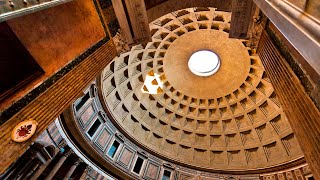




Pantheon
A breathtaking ancient temple in the historic centre. It is worth passing by in the evening, and it can be visited inside.

Roman Forum
The heart of ancient Rome, just across the plaza from the Colosseum, with the ruins of many of the city's most important buildings. It is especially peaceful early in the morning, and you can easily spend a couple of hours exploring.
Palatine Hill
A short walk up from the Forum, this hill holds the remains of the imperial palace. It offers views over the Forum on one side and Circus Maximus on the other.
Circus Maximus
A giant ancient open-air stadium for chariot racing and public events that could hold up to 150,000 people. It is best viewed from the top of Palatine Hill.
Castel Sant'Angelo
A notable site outside the central sightseeing area, easily reached by metro.
Baths of Caracalla
An ancient Roman bath complex, one of the key sites of ancient Rome.
Stadium of Domitian
A 1st-century AD stadium where ancient Romans held games. Piazza Navona was built on its ruins.
Temple of Saturn
One of the oldest temples in Rome, located in the Roman Forum. It dates back to the 6th century BC, and its surviving remains are from 42 BC.
Aurelian Walls
The 3rd-century defensive walls built by Emperor Aurelian. They show how much larger ancient Rome was than the Renaissance city.
Arch of Septimius Severus
A triumphal arch marking one end of the Via Sacra, ancient Rome's main street. Its reliefs served as imperial propaganda celebrating military conquest.
Appian Way
Rome's ancient gateway to the East still has its original paving stones and is lined with tombs of ancient big-shots. It is fun to explore on a rented bike.
Ponte Sant'Angelo
Emperor Hadrian built this bridge in the 2nd century as part of the grand entranceway to his mausoleum. Its angel statues guide pilgrims across the Tiber toward the Vatican.
Mausoleum of Augustus
The tomb of Emperor Augustus, passed on the way to Trastevere.
Pyramid of Cestius
The Pyramid of Cestius is an ancient pyramid over 2,000 years old, built as the tomb of Gaius Cestius next to Porta San Paolo. Since 2015 it has been open to the public only on certain days.
Porta Pia
A major city gate that sets one of Sixtus V's main axes. The street running from it to the Quirinal is lined with Baroque churches whose facades keep the continuity of the street wall.
Curia Julia
A simple brick building in the Forum, once veneered with marble, where the Roman Senate met. The Senate set legal standards that still guide Western civilization.
Arch of Titus
A triumphal arch at the other end of the Via Sacra. Its reliefs show how war and expansion were the business of the Roman state.
Largo di Torre Argentina
A modern transport hub where traffic roars around the excavated remains of some of Rome's oldest temples.
Trajan's Column
A textbook example of continuous narration, with a 200-yard spiral relief winding to the top. It tells the story of Emperor Trajan's military victories at the empire's greatest extent.
Mausoleum of Caecilia Metella
A grand first-century BC tomb on the Appian Way built for the daughter-in-law of an extremely wealthy man.
Ponte Fabricio
An ancient bridge once called Jews' Bridge, used by Jews and other foreigners to commute from Trastevere into central Rome.
Arch of Constantine
This triumphal arch stands next to the Colosseum. Its inscription bears the words 'inspired by the divine'.
Trajan's Forum (Foro di Traiano)
Ancient imperial forum just across the street from the Roman Forum, recommended as a worthwhile add-on.
Vicus Caprarius
Underground labyrinth just around the corner from the Trevi Fountain, with remains of a Roman house and part of the Aqua Virgo aqueduct. It offers insight into ancient Roman life and engineering.
Baths of Diocletian
Ancient public baths recommended for those who enjoy Roman bath complexes.