What to do in Lisbon
102 places curated from 10 travel vlogs — the more a spot gets mentioned, the higher it ranks
Pastéis de Belém
The bakery where Portugal's famous custard tarts originated. They have been handmade by a secret recipe since 1837 and served hot from the oven.




Alfama
Lisbon's thousand-year-old sailors' quarter tumbles from the castle down to the river. Its tangled lanes survived the 1755 earthquake and are full of old-world character.


Belém Tower
A pre-earthquake tower that once protected Lisbon's harbor. It was the last sight departing explorers saw and now symbolizes Portugal's voyages of discovery.
Bairro Alto
A 16th-century high-town district built for shipworkers. In the evening it buzzes with restaurants, many serenading diners with fado music.
Sintra
A royal retreat town about 15 miles from Lisbon. It is known for fabulous mansions, lush gardens and craggy hilltops with grand views.

Pena Palace
Prince Ferdinand's whimsical 19th-century hilltop palace mixes Gothic, Renaissance, Moorish and Manueline styles. Its interior is preserved as it was when the royal family fled in 1910.
Tram 28
Lisbon's renowned nostalgic tram route through the old city and other famous parts of Lisbon.
Baixa
Lisbon's lower town was rebuilt after 1755 on Pombal's earthquake-proof grid plan, making it one of Europe's first planned city centers. It is known for uniform Pombaline buildings and black-and-white cobbled sidewalks.
Castelo de São Jorge
A hilltop castle first built by the Moors and later a royal palace. It is surrounded by a peaceful park with the city's best viewpoint.
Santa Justa Lift
An iron elevator built in 1902, inspired by the Eiffel Tower. It connects the lower town with the Bairro Alto.
Jerónimos Monastery
King Manuel's monastery, funded by spice taxes, holds Lisbon's most impressive church in the ornate Manueline style. It also contains Vasco da Gama's tomb and lacy cloisters Rick calls his favorite in Europe.
Mercado da Ribeira (Time Out Market)
One of Lisbon's oldest markets, housed in an 1882 iron hall with an oriental dome. It combines a traditional fresh-produce market with the Time Out food hall of over 30 stalls and bars.
Praça do Comércio
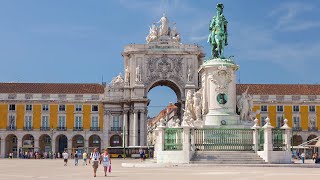
A vast harborfront square on the site of the royal palace destroyed in the earthquake. It has a grand triumphal arch and statues recalling Lisbon's golden age and its recovery after the quake.
Belém
A waterfront district that survived the 1755 earthquake. It preserves Lisbon's great buildings from its Age of Discovery glory days.
Moorish Castle
Thousand-year-old Moorish ramparts reached by a gentle hike through an enchanted forest. The castle was restored in modern times and is a castle lover's dream.
Ginjinha Sem Rival
A tiny, historic ginjinha bar that opens at 7am and serves ginjinha, Portugal's traditional sour cherry liqueur. The cherries are soaked in aguardente and served in the glass.
Manteigaria
A pastel de nata bakery that opened in 2016, with its flagship in the centre and an outpost by the water. Its tarts come warm from the oven with thin, crispy pastry and very gooey, caramelised custard.
Avenida da Liberdade
Lisbon's grand Champs-Élysées-style avenue. Its wide sidewalks and many trees make it feel and function like a park.

Elevador da Bica
A historic funicular that climbs a hill too steep for trolleys, through a rough-and-tumble neighborhood full of small wine bars.
Monument to the Discoveries
A caravel-shaped monument built in 1960 for the 500th anniversary of Henry the Navigator's death. It features Henry, Vasco da Gama, Magellan and other explorers.
Bonjardim (Rei dos Frangos)
Known as the 'King of Chickens', this is the place in Lisbon for spit-roast piri-piri chicken. It is served house-style with fries and salad, and the upstairs room is quieter.
Chiado
Central neighbourhood with a few hills and more local charm than Baixa, a convenient base despite some tourist traps.
Prado
One of Lisbon's first farm-to-table restaurants, with a seasonal menu and natural, biodynamic wines. It mixes fine and rustic dining with dishes like beef tartare, sardine toast and mushroom ice cream.
25 de Abril Bridge
Lisbon's iconic suspension bridge over the Tagus, best admired from the Belém waterfront or the MAAT rooftop.
Oceanário de Lisboa
One of Europe's largest indoor aquariums, with over 16,000 animals and plants from 450 species across four habitats. Its huge central tank is visible through windows placed throughout the building.
Rossio Square
One of Lisbon's main squares since the Middle Ages, known for its traditional calçada pavement, baroque fountains and neoclassical architecture.
Bifanas do Afonso
Cash-only spot for traditional bifanas, thin-sliced pork sandwiches that cost only a couple of euros. Top them with sweet mustard and chili oil.
Pena Park
Lush park surrounding Pena Palace, with shaded paths, thousands of flowers, forests and small lakes. Walking down through it to Sintra town is recommended.
Cervejaria Ramiro
A no-frills, working-class seafood restaurant made famous by Anthony Bourdain's No Reservations, serving goose barnacles, giant tiger shrimp and live lobster. It is so popular it bought the restaurant next door to use as a waiting room.
Church of São Domingos
One of the few buildings to survive the 1755 earthquake. Its scarred pillars still recall the disaster.
Café A Brasileira
A grand old cafe that keeps its 1920s–30s ambience from the days when it fueled Lisbon's literary scene. It is still a good place for a coffee break.
Navy Museum (Museu de Marinha)
A naval museum showing how Portugal built its empire. Exhibits on caravels and navigation instruments explain the country's 15th–16th-century maritime dominance.
Rossio Station
An ornate historic train station and the departure point for trains to Sintra.
Confeitaria Nacional
A long-running pastry shop that had the first telephone line installed in Portugal. It is a good stop for a traditional Lisbon breakfast of espresso (bica) with pastries such as mini bolas de Berlim and pão de Deus.
O Trevo
A simple cafeteria made famous by Anthony Bourdain for its bifana, a garlicky, slow-cooked pork sandwich. It is served with yellow mustard and homemade piri-piri sauce.
Casa Pereira
An old-fashioned shop selling tea, coffee and chocolate, with a huge selection of port, including vintages dating back decades. The owner has worked there since he was 18. Visitors can try tawny port paired with almond chocolate.
Sol e Pesca
A former fishing-supply shop turned canned-fish emporium. Visitors can order premium tinned sardines, mussels and more, served straight from the can with herbs and bread, or cooked into dishes from the menu.
Belém Waterfront Promenade
A riverside promenade in Belém with fantastic views towards the 25 de Abril Bridge.
Ascensor do Lavra
Lisbon's first funicular, inaugurated in 1884, climbing one of the city's steep hills.
Elevador da Glória
A historic funicular famous for the colorful street art along its route.
Elevador do Castelo
A modern public lift that helps visitors climb from downtown toward the castle.
LX Factory
A bohemian complex in an old textile factory, full of trendy bars, restaurants, quirky shops and independent art studios along cobblestone streets.
Livraria Ler Devagar
A bookstore inside LX Factory, described as one of the most unique in the world.
Carmo Convent
A 14th-century convent, once Lisbon's largest church, left roofless by the 1755 earthquake, with grand surviving arches. A small archaeological museum in the sacristy displays historic finds and shows an interactive video on the convent's history.
Lisbon Zoo
Founded in 1884, the zoo is home to over 2,000 animals from 300 species, including dolphins, tigers and primates. A 20-minute cable car ride gives a view of the zoo from above.
MAAT – Museum of Art, Architecture and Technology
A striking riverside museum opened in 2016 that hosts temporary exhibitions by national and international artists and architects. Its rooftop offers great views of the 25 de Abril Bridge and the city.
Tejo Power Station
A former thermoelectric power plant next to MAAT, now a permanent exhibition venue.
Parque das Nações
The former Expo '98 site, home to the Oceanário, Torre Vasco da Gama and views of the Vasco da Gama Bridge.
Vasco da Gama Bridge
A majestic bridge across the Tagus, described in the video as the longest in Europe.
Torre Vasco da Gama
A striking tower landmark in the Expo district.
Telecabine Lisboa
A cable car along the riverfront offering a nice view of the entire Expo district.
Cais das Colunas
A historic waterfront landing on the Tagus in front of Praça do Comércio.
Ribeira das Naus
A historic riverside promenade next to Praça do Comércio.
Arco da Rua Augusta
A triumphal arch commemorating Lisbon's reconstruction after the 1755 earthquake. Visitors can climb it for spectacular views of the square and city.
Rua Augusta
Lisbon's main pedestrian street, full of shops and restaurants, entered through the Rua Augusta Arch.
Café Nicola
A historic café on Rossio Square.
Cristo Rei National Sanctuary
A Christ statue across the Tagus in Almada, resembling Rio de Janeiro's Christ the Redeemer. It is a quiet spot with breathtaking views of the river and Lisbon.
Cascais
Upscale seaside town reached by train along the coast; sit on the left side for sea views. It deserves its own full day, with a historic town centre to explore.
Boca do Inferno
Dramatic, free seaside cliff spot a 15–20 minute walk from Cascais town, where the waves put on a show.
Café da Garagem
Cafe known for its spectacular views over the city. There is often a line out the door, but the views and food are worth the wait.
Último Porto
Seafood restaurant on the docks outside the centre, serving fish caught fresh that day.
Cais do Sodré
Riverside area just below Bairro Alto with a young party scene. It has good access to the rest of the city and few hills.
Príncipe Real
Affluent, chic, boho neighbourhood at the top of the hill that is well worth exploring.
Tapisco
A laid-back counter-service restaurant from chef Henrique Sá Pessoa that serves Spanish-Portuguese fusion tapas. The video features the bomba, cuttlefish tempura, bacalhau à Brás and slow-cooked octopus rice.
Alma
Henrique Sá Pessoa's Michelin-starred fine dining restaurant, mentioned as the chef's flagship.
Senhor Uva
A small natural wine bar off the tourist track, run by Stephanie and Marc, a couple who moved from Montreal. It's a relaxed neighbourhood spot for a glass of natural wine.
Clube de Jornalistas
A journalists' club since 1983 that doubles as a charming restaurant with a beautiful courtyard. Dishes include aubergine with miso caramel, shrimp and melon risotto, and a five-day pork neck.
Neighbourhood
A friendly brunch café run by Ben and Ricky that serves Turkish eggs, breakfast burritos and pulled-pork eggs Benedict. In the evening it also offers craft beer on tap, burgers and cocktails.
Bairro do Avillez
Chef José Avillez's large food complex in a converted 11,000-square-foot former artist's house, with four restaurants inside. In its Taberna the hosts ate garlic-chilli prawns, a steak sandwich in a muffin and a pastel de nata dessert, with house-made wine.
Belcanto
José Avillez's two-Michelin-star restaurant, mentioned in passing.
Taberna Sal Grosso
A tiny, much-recommended tavern down a steep hill with a low doorway and only a few seats, serving Portuguese food. Dishes include octopus, cod tongues, pork cheek and passion fruit crème brûlée.
Alcântara
Described as an up-and-coming area a bit outside central Lisbon.
Musa
A local Lisbon craft brewery whose beers, including a New England IPA, are drunk on the street in the summer heat.
Lupita
A popular pizza place whose sourdough starter is used for Tricky's bread.
Tricky's
A chef-favourite restaurant run by friends Jenny and Joel, mixing Vietnamese, French, Italian and Portuguese influences alongside natural wine. Highlights include red-wine-braised octopus, spinach pasta and beef tongue in fermented black bean sauce.
Miradouro da Senhora do Monte
Hilltop viewpoint known for stunning views over Lisbon, mentioned in the video's intro.
Miradouro de Santa Luzia
Alfama viewpoint that is especially magical at sunrise, when the sky turns red to orange over the water. Arriving early also means you can enjoy it before the crowds.
Portas do Sol Café
Café near Miradouro de Santa Luzia, recommended for breakfast. Try a tosta mista with fresh orange juice and coffee for about $10.
Museu Nacional do Azulejo
The National Tile Museum is set in a former convent and traces the history of Portuguese azulejos, highlighted by a panoramic tile painting of Lisbon. It also has a beautiful courtyard and café, and entry is about $5.
Rua de São Pedro
Alfama street where Fado music often drifts through the air.
Mesa de Frades
Charming restaurant in a former chapel decorated with azulejo tiles, recommended for clams Bulhão Pato and Bacalhau à Brás. Reservations are advised, especially on weekends.
Convento da Graça
One of Lisbon's oldest convents, set on one of the city's highest hills. It is free to enter and takes about 30 minutes to explore.
Miradouro da Graça
Viewpoint in front of the Convento da Graça with panoramic views of Lisbon and the Tagus River.
Mosteiro de São Vicente de Fora
Monastery known for stunning tilework and rooftop and tower views that rival any miradouro. Tickets cost about $5.50, and it is best visited late in the day before the 6 PM closing.
Miradouro das Portas do Sol
Terraced viewpoint in the heart of Alfama, recommended at sunset. It gets crowded, but with patience you can find a table with a view.
Quiosque das Portas do Sol
Kiosk at the Portas do Sol viewpoint selling glasses of vinho verde for about $5, a good spot for sunset.
Boa-Bao
Popular pan-Asian restaurant loved for its bao buns, especially the seabass bao, plus starter platters and noodles at around $20-30 per person. It takes no reservations, so arrive 20-30 minutes before opening.
Fábrica da Nata
Bakery the hosts rated as having the best pastel de nata they've had. Its breakfast combo of a ham and cheese croissant, a pastel de nata and a latte costs about $4.
Palácio Nacional de Belém
Belém Palace is one of the neighbourhood's iconic landmarks, best visited early in the morning before the cruise crowds arrive.
Sud Lisboa
Modern restaurant and event venue near Belém with an unbeatable Tagus River view from its patio. It suits a treat-yourself meal of dishes like oxtail ragù and seafood pasta, at about $50-70 per person.
Tascantiga
Cozy spot in central Sintra near the Moorish Castle, serving sardine paté, Bacalhau à Brás and Queijada de Sintra. Expect about $30 per person.
A Cevicheria
Small ceviche restaurant serving fresh ceviches and seafood dishes under a giant octopus hanging from the ceiling, at about $25-35 per person. It takes no dinner reservations, so arrive before opening.
Martinho da Arcada
A historic cafe and restaurant dating back to 1782, said to be the oldest cafe in Lisbon. It has an outdoor patio under the arches with a view of the square, and locals say it still serves the best pastéis de bacalhau (cod cutlets).
Zé da Mouraria
A Portuguese restaurant that was the top place Mark wanted to try in Lisbon, but it was unexpectedly closed when he arrived.
Cantinho do Aziz
A colourful Mozambican restaurant with Indian and Portuguese influences, tucked up a flight of steps in a quiet stairway cul-de-sac. It is known for exceptional beef samosas, tender lamb rib curry with coconut rice and an award-winning chili sauce.
Solar dos Presuntos
A large, legendary and fairly expensive restaurant famous for high-end seafood from its lobster tank and for hand-sliced cured ham. Highlights included the ham and cheese starters, extremely tender grilled octopus with garlic, and grilled sea bream.
Quinta da Regaleira
A late-1800s estate designed mainly by Italian architect Luigi Manini, with a romantic palace, a chapel and lush gardens containing the famous Initiation Well, grottos and towers. It is less touristy and quieter in the morning, and exploring it takes a few hours.
Sintra National Palace
A palace in Sintra's town centre, seen along the walk from the train station to Quinta da Regaleira.
Mouraria
One of Lisbon's old traditional neighbourhoods, mentioned as an area affected by gentrification and Airbnb conversions.
Mercado de Campo de Ourique
A neighbourhood market with local food stands selling homemade jams and dried fruit, plus good lunch options. It is a nice place to recharge on a hot day.
O Tasco
A local favourite in a touristy area, packed with locals and known for charcoal-roasted chicken served with house peri peri sauce in a distinctive jar. The host calls it a hidden gem with exceptionally tender chicken served with rice.
A Ginjinha
Said to be the oldest ginjinha shop in Lisbon, this hole-in-the-wall sells only shots of house-made cherry liqueur poured from a bottle refilled from the wall. Its ginjinha is smoother and sweeter than the one across the street, and it stays popular with locals.
Mosteiro de São Vicente de Fora
Monastery known for stunning tilework and rooftop and tower views that rival any miradouro. Tickets cost about $5.50, and it is best visited late in the day before the 6 PM closing.